Aderia Retro Hananowa Gift Box Dessert Glass 285ml
Aderia Retro Hananowa Gift Box Dessert Glass 285ml
 By Aderia
More Designs:


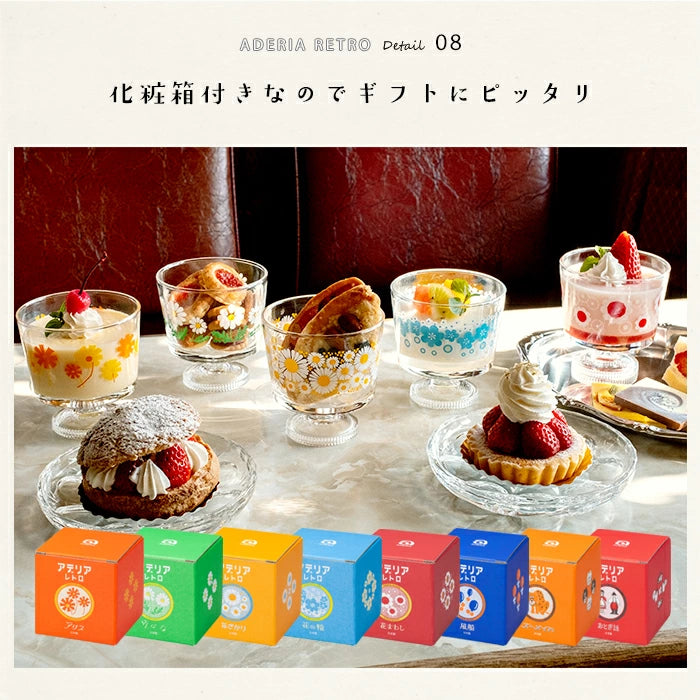
Bring a touch of nostalgic Japanese charm to your table with the Aderia Retro Hananowa Dessert Glass. Featuring the cheerful Hananowa (“Ring of Flowers”) pattern, this beautifully decorated glass is part of the Aderia Retro collection, which revives iconic Showa-era designs for modern homes.
The elegant stemmed shape is perfect for serving ice cream, parfaits, fruit, puddings, and special treats, while the cheerful floral pattern adds colour and character to any table setting.
Produced by Ishizuka Glass in Japan, every piece is made to modern quality standards and presented in a beautifully designed Aderia Retro gift box inspired by the original packaging.
- Size: Approx. Ø9 × H9.4 cm
- Capacity: Approx. 285ml
- Material: Soda glass
- Ideal for desserts, parfaits, fruit, and drinks
- Presented in an Aderia Retro gift box
- Authentic Showa-era inspired design
- Not suitable for dishwasher & microwave
Beautifully presented and full of nostalgic character, it makes a thoughtful gift for lovers of Japanese design, vintage-inspired homeware, and retro glassware collections.
Made in Japan
Couldn't load pickup availability
 FREE SHIPPING OVER £75
 NEXT DAY DELIVERY AVAILABLE
 MADE TO LAST
Care Instructions
General Information
What's in the box
Maker Information
- Cleaning instructions
- Hand wash only
- Color pattern
- Clear, White, Gray, Gold, Green, Floral, Yellow, Blue, Multicolor
- Drinkware crystal composition
- Lead-free crystal
- Drinkware insulation
- Non-insulated, Single wall
- Drinkware material
- Glass
- Drinkware shape
- Tapered, Round
- Handle type
- No handle
- Style
- Retro/Vintage
Product Information
Couldn't load pickup availability


Explore more from Tableware
-
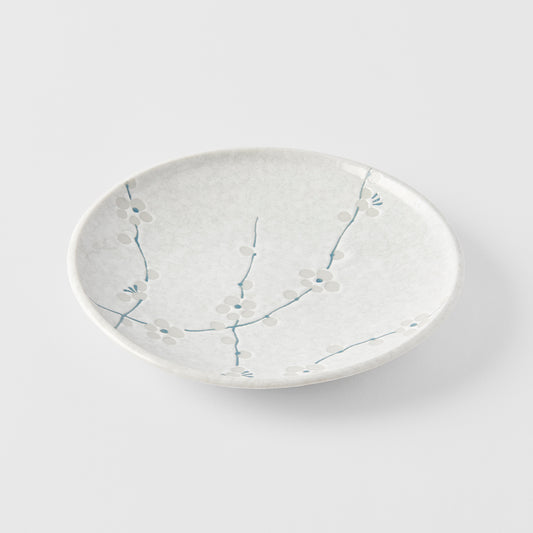
White Blossom tapas plate 17cm
Regular price £10.00Regular priceUnit price per -
 NEW
NEWAurora Ramen Bowl 22cm
Regular price £22.00Regular priceUnit price per -
 NEW
NEWEarth & Sky Ramen Bowl 22cm
Regular price £22.00Regular priceUnit price per -
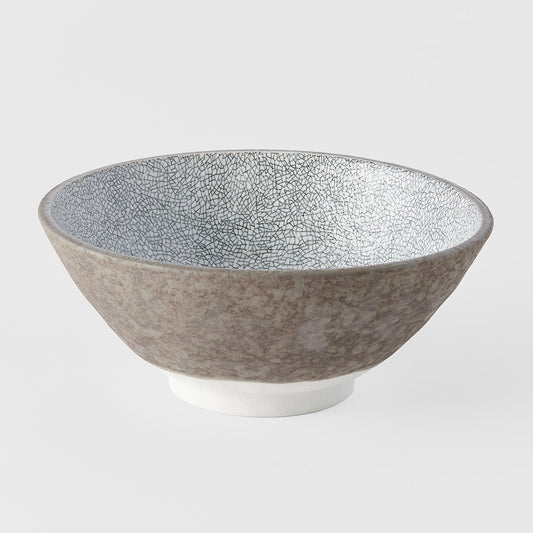
Crazed Grey Udon Bowl 19cm
Regular price £19.00Regular priceUnit price per







The quality of MIJ products are second to none, they’re my go-to, just beautiful
SAMIRA EFFA, HEAD CHEF, EIGHTYEIGHT GRANTLEY HALL
As seen on